 Stars4Water
infrastructure
Type of resources
Available actions
Topics
Keywords
Contact for the resource
Provided by
Formats
Representation types
Update frequencies
status
Scale
-
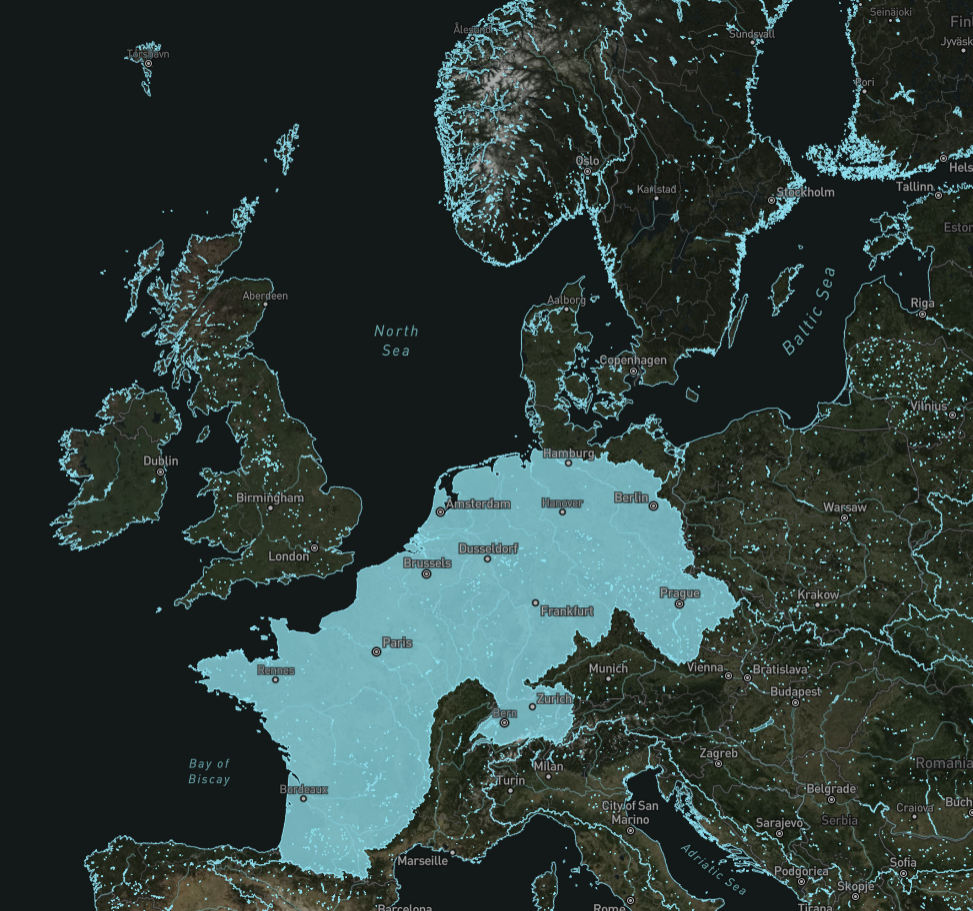
Climate change and growing pressure on natural resources are existential threats to both humanity and nature. These threats require ambitious responses. Increasing water risks have led to more attention on water-related threats. While demand for water has risen sharply in many regions of the world, as a result of population growth and economic expansion, climate change is expected to decrease water supply, alter the timing of water availability, and increase the severity of droughts and floods. These growing pressures on water resources undermine water security and contribute to conflict, migration, health crises, and food and energy insecurity across the world. Data on global water resources is essential for managing these growing risks and challenges. Global Water Watch, supported by Google.org and the Water, Peace, and Security Partnership, will provide free, globally accessible, near-real-time information on water. Deltares, World Resources Institute (WRI), and World Wildlife Fund (WWF) are partnering to create the data platform, which will house information on over 70,000 global reservoirs and major river systems, derived using satellite data, machine learning, and cloud computing. This data will help decision-makers respond to extreme weather events, manage growing risks of climate change, make societies more climate resilient, and preserve and restore our vital ecosystems and the many services they provide.
-
Infrastructures including vector layers that represent the network of roads, gravel roads, thacks, railroad lines and build-up areas in the CORB-contributing area of Angola. Source: Data provided by SINFIC, based on the Topographic Map of Angola (IGCA). This dataset is part of the GIS Database for the Environment Protection and Sustainable Management of the Okavango River Basin project (EPSMO). Detailed information on the database can be found in the “GIS Database for the EPSMO Project†document produced by Luis Veríssimo (FAO consultant) in July 2009, and here available for download.
-
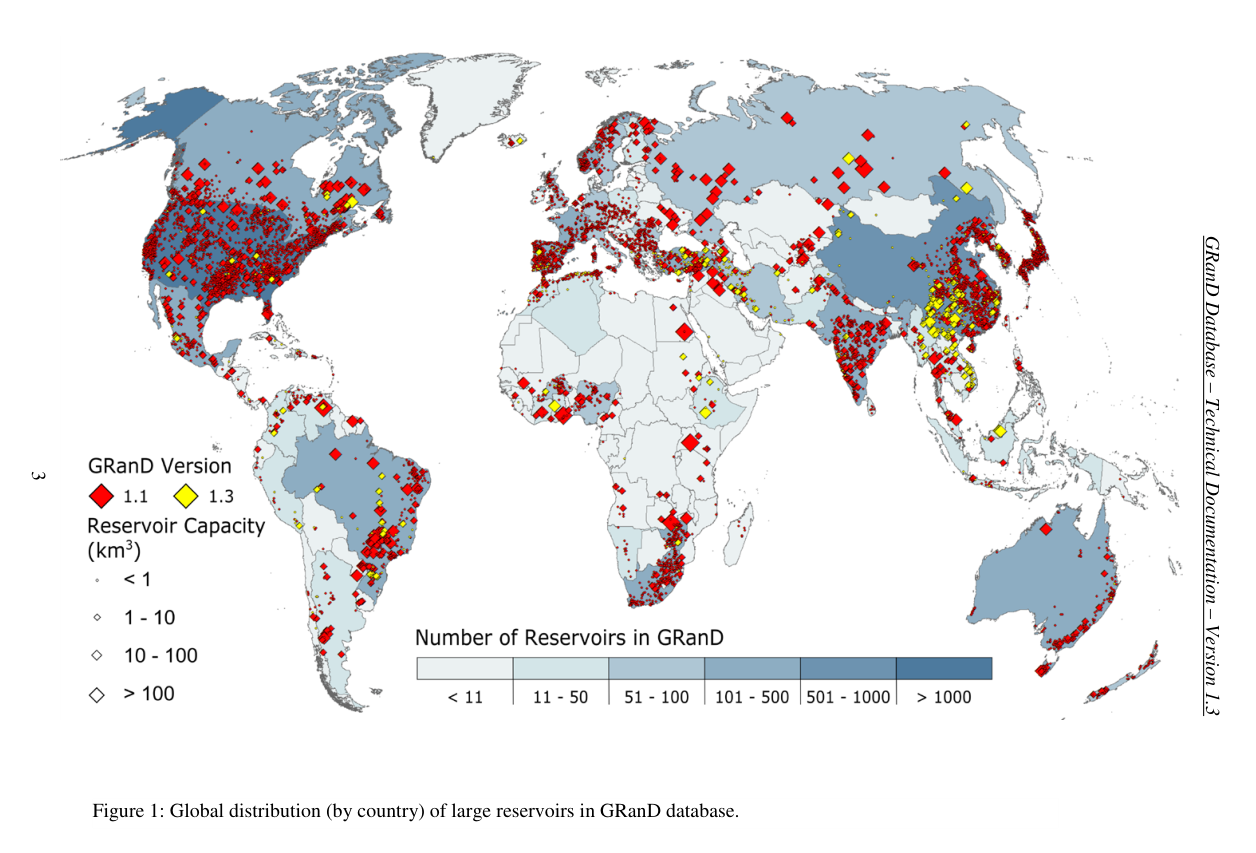
The Global Reservoir and Dam Database (GRanD) v1.1 is a product of the Global Water System Project, which initiated a collaborative international effort to collate existing dam and reservoir datasets with the aim of providing a single, geographically explicit and reliable database for the scientific community. The initial version 1.1 of GRanD contains 6,862 records of reservoirs and their associated dams with a cumulative storage capacity of 6,197 km3. Data was assembled from numerous sources by eleven participating institutions, and the dataset is managed by McGill University. Though GRanD has undergone an update, GRanD v1.1 will remain available to support existing and future research. GRanD v1.3 augments v1.1 with an additional 458 reservoirs and associated dams to bring the total number of records to 7320. Most of the added reservoirs were constructed between 2000 and 2016; global reservoir storage is increased by 666.5 km3. Updates have also been made to attribute data originally developed for GRanD v1.1; this includes a new column to indicate whether and when a dam has been removed. Access the data from our directory page.
-
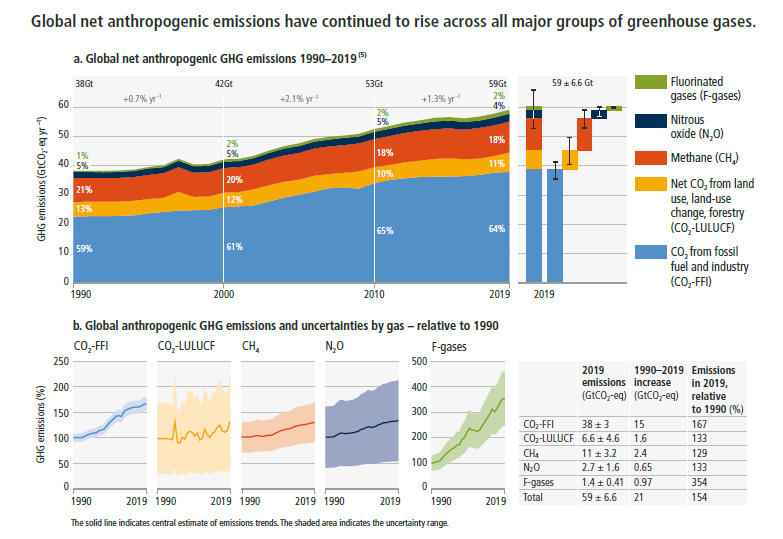
As part of the IPCC's Sixth Assessment Report (AR6), authors from Working Group III on Mitigation of Climate Change undertook a comprehensive exercise to collect and assess quantitative, model-based scenarios related to the mitigation of climate change. Building on previous assessments, such as those undertaken for the Fifth Assessment Report (AR5) and the Special Report on Global Warming of 1.5°C (SR15), the calls for scenarios in AR6 have been expanded to include energy, emissions, and sectoral scenarios from global to national scales, thus more broadly supporting the assessment across multiple chapters (see Annex III, Part 2 of the WG III Report and the About tab for more details). The compilation and assessment of the scenario ensemble was conducted by authors of the IPCC AR6 report, and the resource is hosted by the International Institute for Applied Systems Analysis (IIASA) as part of a cooperation agreement with Working Group III of the IPCC. The scenario ensemble contains 3,131 quantitative scenarios with data on socio-economic development, greenhouse gas emissions, and sectoral transformations across energy, land use, transportation and industry. These scenarios derive from 188 unique modelling frameworks and 95+ model families that are either globally comprehensive, national, multi-regional or sectoral. The criteria for submission included that the scenario is presented in a peer-reviewed journal accepted for publication no later than October 11th, 2021, or published in a report determined by the IPCC to be eligible grey literature by the same date.