 Stars4Water
socioeconomic
Type of resources
Topics
Keywords
Contact for the resource
Provided by
Years
Representation types
Update frequencies
status
Scale
-
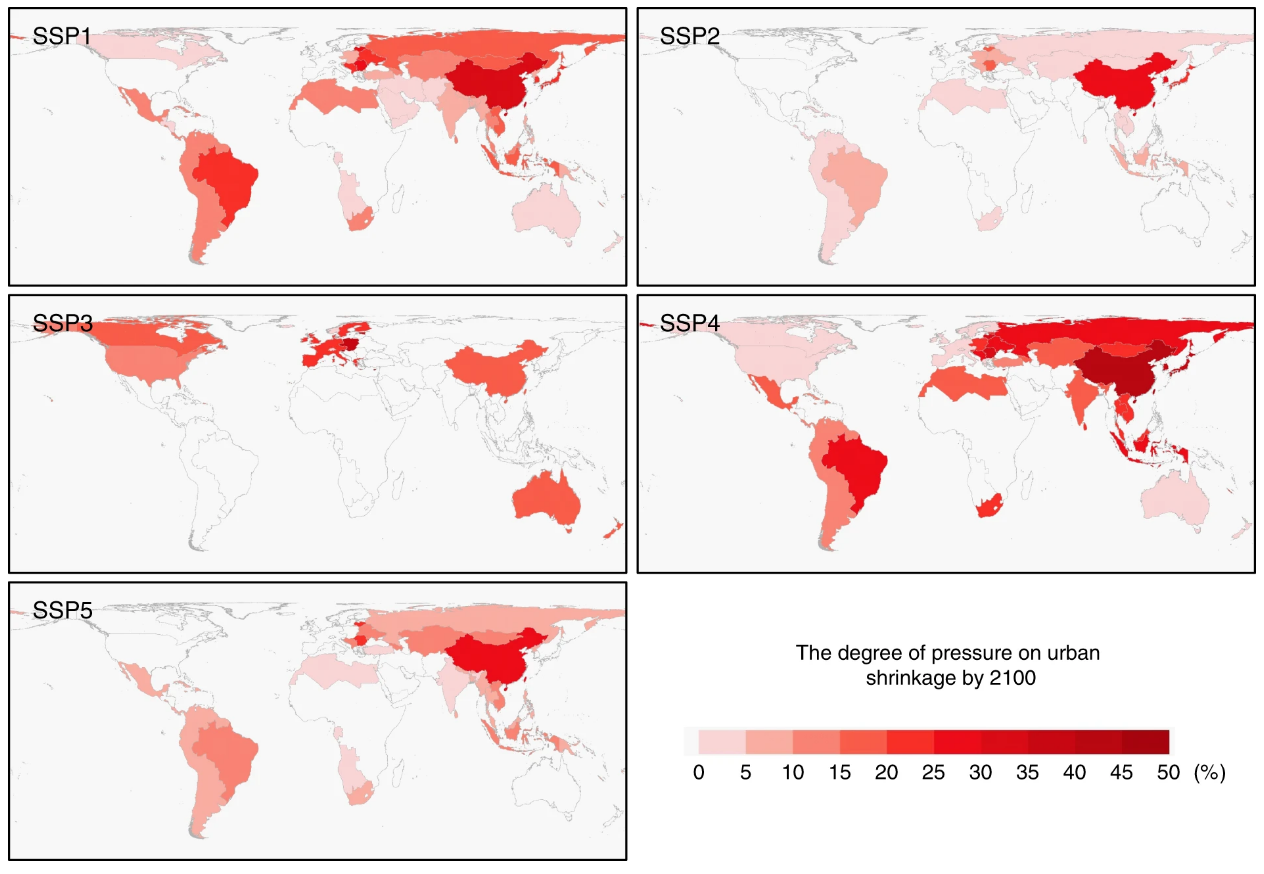
Dataset with article https://www.nature.com/articles/s41467-020-14386-x (https://doi.org/10.1038/s41467-020-14386-x). Despite its small land coverage, urban land and its expansion can have profound impacts on global environments. Therefore, a proper understanding of how future urban land change will affect other land covers is important to alleviate the social and environmental problems that challenge the sustainable developments of human societies. Recently, The Shared Socioeconomic Pathways (SSPs) were adopted by the Coupled Model Intercomparison Project Phase 6 (CMIP6), enabling researchers to conduct unified, comparable multi-scenario simulations and integrate such simulation products into climate change research. The SSPs focus on the key socio-economic factors including demographic dynamics, economic development, technological change, social, cultural, and institutional changes and policies. Here, we present the scenario projections of global urban land expansion under the framework of the shared socioeconomic pathways (SSPs) every 10 years from 2015 to 2100. Our projections feature a fine spatial resolution of 1 km that preserves spatial details and avoids potential distortions in urban land patterns. The objective is to enable the assessment of different scenarios of future urban expansion and their related impacts on a global scale under the latest recognized SSP scenarios.
-
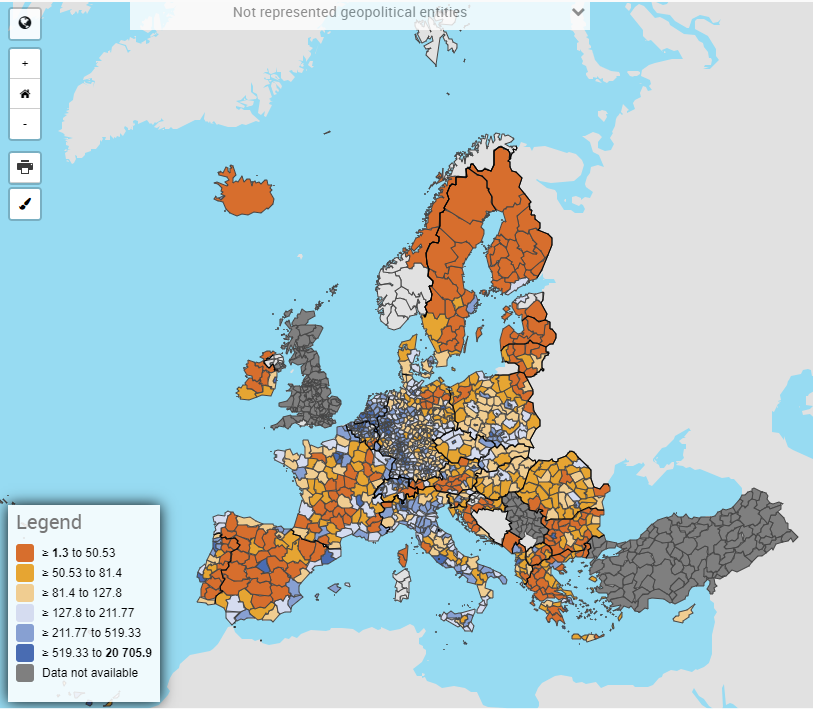
Member States send to Eurostat data on population on of 31 December of the reference year under Regulation 1260/2013 on European demographic statistics. The data are conventionally published by Eurostat as population on 1 January of the following year (reference year + 1). The aim is to collect annual mandatory and voluntary demographic data from the national statistical institutes. Mandatory data are those defined by the legislation listed under ‘6.1. Institutional mandate — legal acts and other agreements’. The completeness of the demographic data collected on a voluntary basis depends on the availability and completeness of information provided by the national statistical institutes. For more information on mandatory/voluntary data collection, see 6.1. Institutional mandate — legal acts and other agreements. The following statistics are available. Population on 1 January by sex and by: - single age and educational attainment / marital status / broad group of citizenship / broad group of country of birth; - five-year age group and citizenship / country of birth; - citizenship and broad group of country of birth / country of birth and broad group of citizenship; - broad age group and NUTS 3 (under regional data population folder); - single age and NUTS 2 (under regional data population folder); - five-year age group and NUTS 2 / NUTS 3 (under regional data population folder). Population structure statistics: median age of population, proportion of population by various age groups, old age dependency ratio.
-
Yearly data on freshwater resources, water abstraction and use are collected annually by means of the RWQ Eurostat Regional Water Questionnaire. Data aggregation: RBD (River basin districts according to the Water Framework Directive, 2000/60/EC) and their subunits. The classifications are made according to the definitions of the RWQ (Regional Water Questionnaire). NACE Eurostat strives for further harmonisation with reporting frameworks under current/future European legislation, such as the Urban Wastewater treatment Directive (91/271/EEC) or the Water Framework Directive (2000/60/EC). Collection and compilation of annual data on a diversity of topics, comprising the following data sets for every RBD/SU: Renewable fresh water resources; Annual fresh water abstraction by source and by sector and other sources of water (marine and brackish water, desalinated water, reused water); Regional water transfers; Water losses; Water use;
-
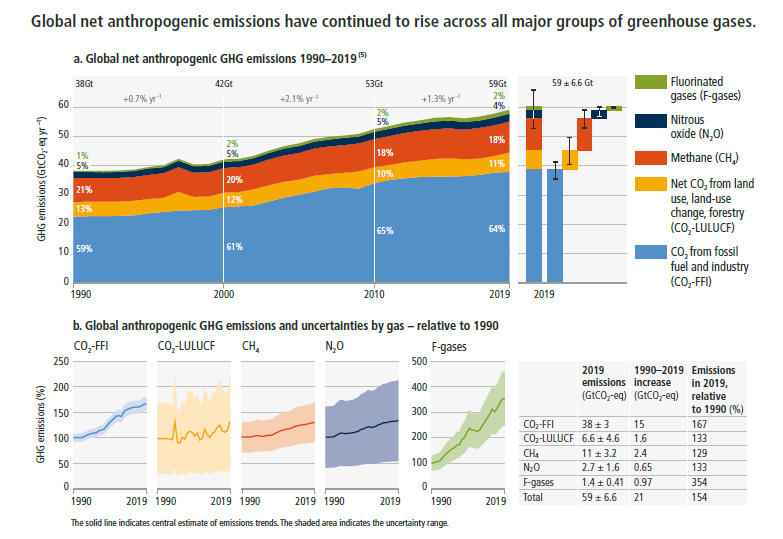
As part of the IPCC's Sixth Assessment Report (AR6), authors from Working Group III on Mitigation of Climate Change undertook a comprehensive exercise to collect and assess quantitative, model-based scenarios related to the mitigation of climate change. Building on previous assessments, such as those undertaken for the Fifth Assessment Report (AR5) and the Special Report on Global Warming of 1.5°C (SR15), the calls for scenarios in AR6 have been expanded to include energy, emissions, and sectoral scenarios from global to national scales, thus more broadly supporting the assessment across multiple chapters (see Annex III, Part 2 of the WG III Report and the About tab for more details). The compilation and assessment of the scenario ensemble was conducted by authors of the IPCC AR6 report, and the resource is hosted by the International Institute for Applied Systems Analysis (IIASA) as part of a cooperation agreement with Working Group III of the IPCC. The scenario ensemble contains 3,131 quantitative scenarios with data on socio-economic development, greenhouse gas emissions, and sectoral transformations across energy, land use, transportation and industry. These scenarios derive from 188 unique modelling frameworks and 95+ model families that are either globally comprehensive, national, multi-regional or sectoral. The criteria for submission included that the scenario is presented in a peer-reviewed journal accepted for publication no later than October 11th, 2021, or published in a report determined by the IPCC to be eligible grey literature by the same date.
-
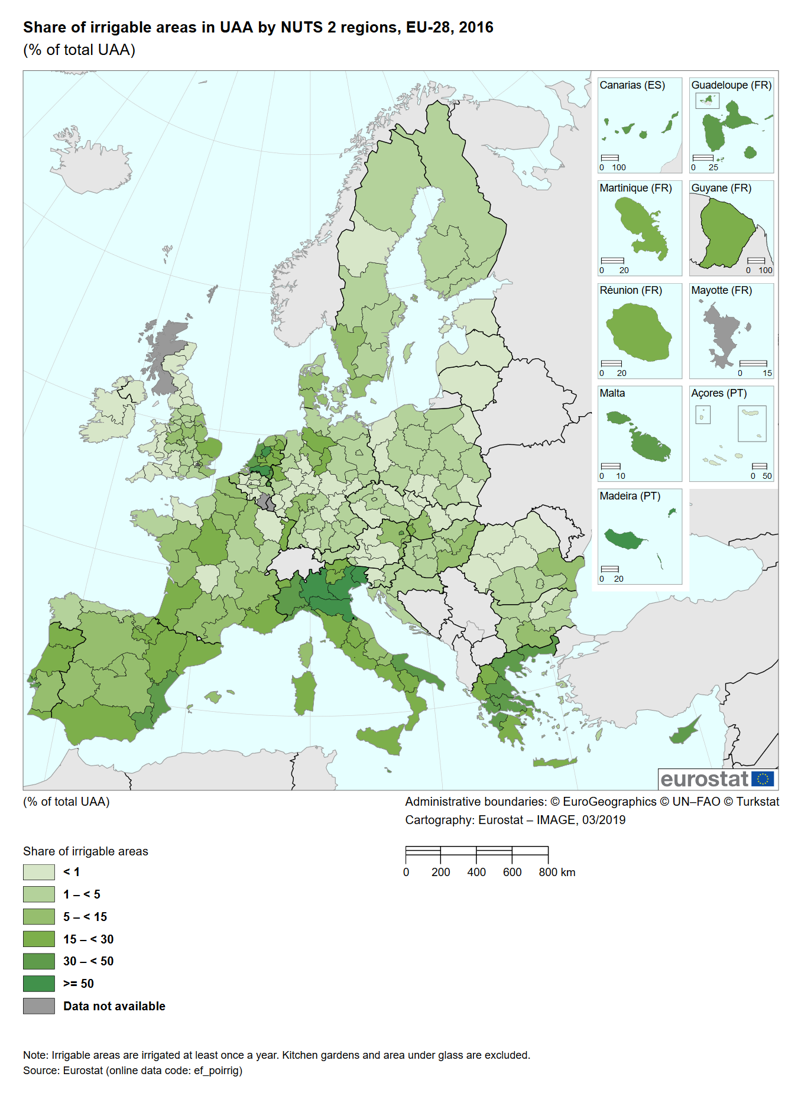
The indicator assesses the trend of the irrigable and irrigated areas and their share of the total utilised agricultural area (UAA). The irrigable area is the area which is equipped for irrigation. This area does not show so much variation from year to year as it is costly for the farmer to invest in irrigation equipment. The irrigated area measures the actual amount of land irrigated and can vary significantly from year to year due to, for instance, meteorological conditions or the choice of crop.
-
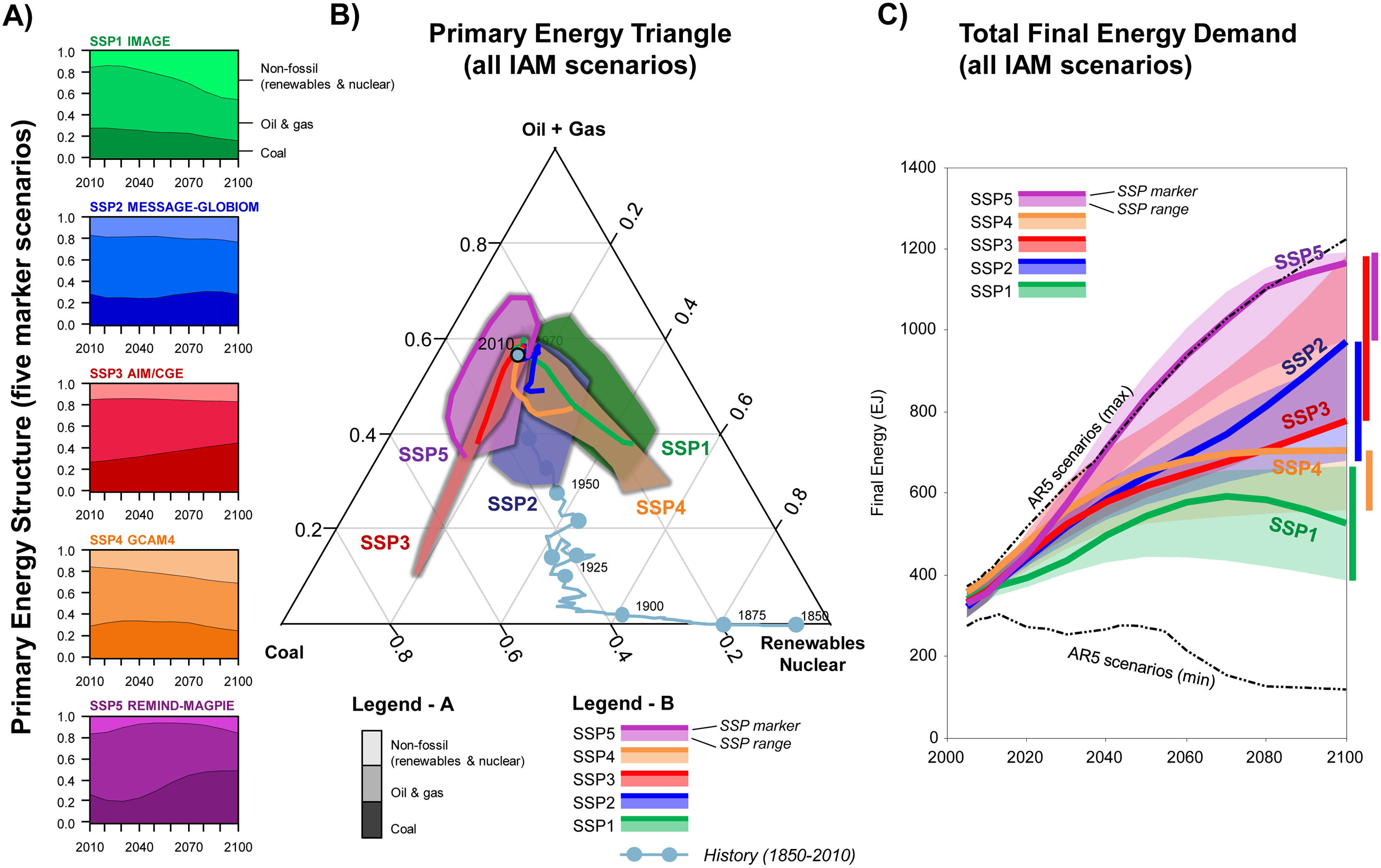
This paper and dataset presents the overview of the Shared Socioeconomic Pathways (SSPs) and their energy, land use, and emissions implications. The SSPs are part of a new scenario framework, established by the climate change research community in order to facilitate the integrated analysis of future climate impacts, vulnerabilities, adaptation, and mitigation. The pathways were developed over the last years as a joint community effort and describe plausible major global developments that together would lead in the future to different challenges for mitigation and adaptation to climate change. The SSPs are based on five narratives describing alternative socio-economic developments, including sustainable development, regional rivalry, inequality, fossil-fueled development, and middle-of-the-road development. The long-term demographic and economic projections of the SSPs depict a wide uncertainty range consistent with the scenario literature. A multi-model approach was used for the elaboration of the energy, land-use and the emissions trajectories of SSP-based scenarios. The baseline scenarios lead to global energy consumption of 400–1200 EJ in 2100, and feature vastly different land-use dynamics, ranging from a possible reduction in cropland area up to a massive expansion by more than 700 million hectares by 2100. The associated annual CO2 emissions of the baseline scenarios range from about 25 GtCO2 to more than 120 GtCO2 per year by 2100. With respect to mitigation, we find that associated costs strongly depend on three factors: (1) the policy assumptions, (2) the socio-economic narrative, and (3) the stringency of the target. The carbon price for reaching the target of 2.6 W/m2 that is consistent with a temperature change limit of 2 °C, differs in our analysis thus by about a factor of three across the SSP marker scenarios. Moreover, many models could not reach this target from the SSPs with high mitigation challenges. While the SSPs were designed to represent different mitigation and adaptation challenges, the resulting narratives and quantifications span a wide range of different futures broadly representative of the current literature. This allows their subsequent use and development in new assessments and research projects. Critical next steps for the community scenario process will, among others, involve regional and sectoral extensions, further elaboration of the adaptation and impacts dimension, as well as employing the SSP scenarios with the new generation of earth system models as part of the 6th climate model intercomparison project (CMIP6). Recommended article. The Shared Socioeconomic Pathways and their energy, land use, and greenhouse gas emissions implications: An overview, Global Environmental Change, Volume 42, Pages 153-168, 2017, ISSN 0959-3780, DOI:110.1016/j.gloenvcha.2016.05.009.